In the bustling world of business, maintaining a healthy cash flow is akin to keeping the heart of your enterprise beating steadily. For UK businesses, navigating the myriad of working capital financing options can be daunting yet crucial for growth and sustainability. Imagine a thriving small business in London, poised to expand its operations overseas. The opportunity is ripe, but the cash flow is tight. This is where working capital financing steps in, offering the lifeline needed to seize growth opportunities without compromising daily operations.
This guide delves deep into the realm of working capital financing in the UK, exploring various options available to UK businesses. From traditional business loans to innovative invoice finance and flexible overdrafts, each solution offers unique benefits and considerations. Whether you’re a startup grappling with cash flow challenges or an established enterprise eyeing expansion, understanding these financial tools is key to making informed decisions that propel your business forward.
What is Working Capital Financing?
working capital financing in the UK is the financial backbone of any business, representing the difference between current assets and current liabilities. It’s the cash available to meet short-term obligations and fund day-to-day operations. Think of it as the fuel that keeps your business engine running smoothly. Without sufficient working capital, even the most promising ventures can stall.
In practical terms, working capital ensures you can pay your employees, purchase inventory, and cover other operational expenses. It’s also crucial for navigating seasonal fluctuations in demand and capitalizing on new opportunities. For instance, a retail business gearing up for the holiday season needs adequate working capital to stock up on inventory and manage increased sales volume.
Maintaining healthy working capital levels is vital for business stability and growth. It allows you to meet financial obligations promptly, avoid unnecessary debt, and invest in opportunities that drive long-term success. A business with strong working capital financing in the UK is better positioned to weather economic downturns and unexpected expenses, providing a buffer that ensures continuity and resilience.
What are the Different Types of Working Capital Finance?
Working capital finance provides businesses with the liquidity needed to manage short-term expenses and seize growth opportunities. Various financing options cater to different business needs, offering flexibility and support tailored to your unique circumstances.
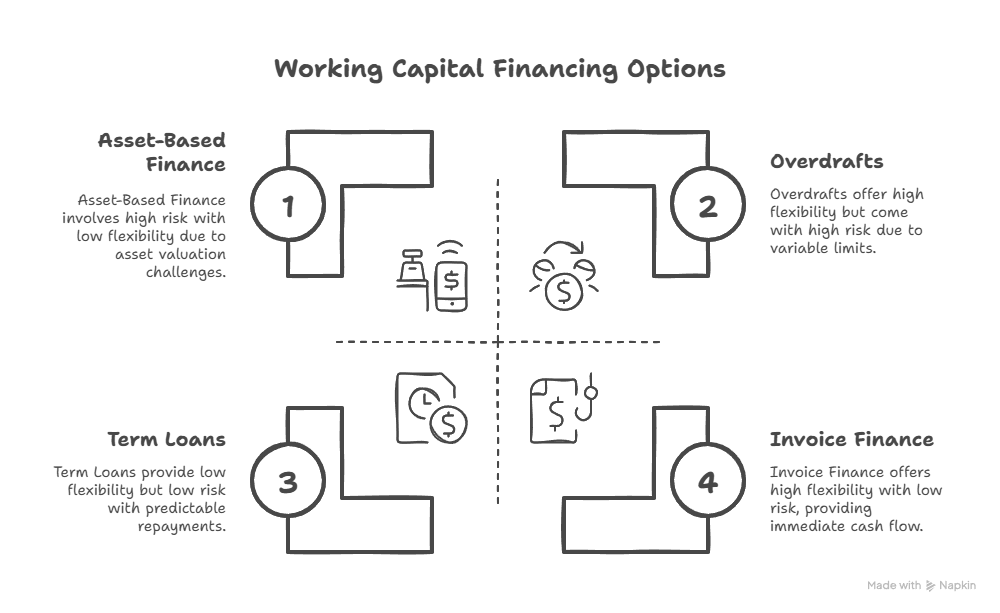
Business Loans
Business loans are a traditional and widely used form of working capital finance. They provide a lump sum of capital that can be used for various purposes, from managing day-to-day operations to funding growth initiatives. Business loans are often the first option considered by businesses due to their straightforward nature and the familiarity most business owners have with this type of financing.
Types of Business Loans for Working Capital Finance
Term Loans: These loans offer a specific amount with a set repayment schedule. They can be secured or unsecured, depending on the lender’s requirements. Term loans are ideal for businesses with clear funding needs and repayment plans.
Short-term Loans: Designed for immediate needs, these loans are typically repaid within a year, providing quick access to funds. They are suitable for businesses facing temporary cash flow shortages or unexpected expenses.
Revolving Credit Facilities: Similar to overdrafts, these provide a credit limit that businesses can draw upon as needed, offering flexibility in cash management. This option is beneficial for businesses with fluctuating cash flow needs.
Government-backed Loans: Supported by schemes like the British Business Bank, these loans offer favorable terms for small businesses, making them an attractive option for startups and SMEs. Government-backed loans often come with lower interest rates and more lenient eligibility criteria.
Small Business Loans: How to Secure Funding for Your Business
Advantages and Disadvantages of Working Capital Loans
Advantages:
- Flexibility: Funds can be used for a wide range of purposes, not just tied to invoices. This flexibility allows businesses to allocate resources where they are most needed.
- Predictable Repayments: Fixed-term loans provide predictability in budgeting and financial planning. Businesses can plan their finances with confidence, knowing exactly how much they need to repay each month.
- Potential for Larger Amounts: Depending on the business’s creditworthiness, larger sums can be borrowed compared to invoice finance. This makes business loans suitable for significant investments or expansions.
Disadvantages:
- Credit Requirements: A good credit score is often necessary to qualify for favorable terms. Businesses with poor credit histories may struggle to secure loans or face higher interest rates.
- Collateral Risk: Secured loans require collateral, which could be at risk if the loan is not repaid. This can be a significant concern for businesses with limited assets.
- Longer Approval Times: The process to obtain a business loan can be longer than for invoice financing solutions. This may not be ideal for businesses needing immediate access to funds.
Explore business loans as a Working Capital Financing solution and get a quote today!
Invoice Finance as Working Capital Financing
Invoice finance is a popular option for businesses looking to unlock the value tied up in unpaid invoices. It provides immediate access to funds, improving cash flow and reducing the burden of debt collection. Invoice finance is particularly beneficial for businesses with long payment cycles or those experiencing delays in receiving payments from customers.
Explore invoice finance as a Working Capital Financing solution and get a quote today!
Types of Invoice Finance for Working Capital
Invoice Factoring: Involves selling invoices to a factoring company at a discount. The company manages the sales ledger and collects payments, providing immediate cash flow and credit management support. This option is ideal for SMEs without extensive credit management resources.
Invoice Factoring Process Explained
Invoice Discounting: Similar to factoring, but the business retains control over its sales ledger and debt collection process. This option is often preferred by larger companies with robust credit management systems. Invoice discounting allows businesses to maintain customer relationships while improving cash flow.
Everything you need to know about invoice discounting: Invoice Discounting Explained.
Advantages and Disadvantages of Invoice Finance
Advantages:
- Immediate Cash Flow: Provides quick access to funds, often within 24 to 48 hours. This rapid access to capital can be crucial for businesses facing cash flow challenges.
- Scalability: Grows with your sales, making it a scalable option for growing businesses. As sales increase, so does the availability of funds through invoice finance.
- Credit Management Support: With factoring, businesses benefit from the expertise of the factoring company in credit control and debt collection. This can be a significant advantage for businesses lacking in-house credit management capabilities.
Disadvantages:
- Costs and Fees: Factoring and discounting come with fees and interest charges, which can be higher than traditional loans. Businesses need to carefully evaluate the cost of invoice finance to ensure it aligns with their financial goals.
- Customer Perception: Some businesses worry that using a factoring company may negatively impact their relationship with customers. Transparency and communication are key to mitigating this concern.
- Dependence on Customer Creditworthiness: The amount of funding available depends on the creditworthiness of your customers, not your business. This can be a limitation for businesses with customers who have poor credit histories.
Overdrafts as a Working Capital Financing Solution
Overdrafts offer a flexible form of short-term financing, allowing businesses to withdraw more money than is available in their bank account, up to an agreed limit. This facility acts as a safety net, providing a buffer to manage cash flow fluctuations and unexpected short-term expenses. Overdrafts are particularly useful for businesses with seasonal cash flow variations or those facing unexpected expenses.
Overdrafts as a Funding Solution for Small Businesses
Advantages and Disadvantages of Overdrafts as a Working Capital Solution
Advantages:
- Flexibility: Overdrafts offer immediate access to additional funds when needed, without the need for a new loan application each time. This flexibility allows businesses to respond quickly to changing financial needs.
- Cost-Effective for Short-Term Needs: Interest is typically charged only on the amount overdrawn, making it cost-effective for short-term needs. Businesses can minimize costs by only using the overdraft when necessary.
- Ease of Access: Overdrafts can be easier to arrange with a bank, especially for businesses with a good banking relationship. This ease of access makes overdrafts a convenient option for many businesses.
Disadvantages:
- Higher Interest Rates: The cost of using an overdraft can be higher compared to traditional loans, especially if used extensively. Businesses need to carefully manage their overdraft usage to avoid excessive costs.
- Variable Limits: Banks can alter the overdraft limit, sometimes without prior notice, which can affect financial planning. Businesses should maintain open communication with their bank to manage this risk.
- Risk of Dependency: There’s a risk of becoming reliant on an overdraft for everyday expenses, which can lead to financial stress if not managed properly. Businesses should use overdrafts as a temporary solution rather than a long-term financing strategy.
Asset-Based Finance as Working Capital Financing
Asset-based finance allows businesses to borrow money using assets on their balance sheet as security. This can include physical assets like stock, equipment, and property, or intangible assets like intellectual property. Asset-based finance is a versatile option for businesses with valuable assets that can be leveraged to access capital.
Explore Asset Finance as a Working Capital Solution and get a quote today!
Advantages and Disadvantages of Asset Finance as Working Capital Financing
Advantages:
- Access to Capital: Provides access to capital that might otherwise be tied up in assets. This can improve liquidity and provide funds for growth or operational needs.
- Flexible Use: Generally places few restrictions on what the funds can be used for. Businesses can allocate funds to areas that will generate the most value.
- Potential for Larger Loans: Depending on the value of the assets used as security, businesses may access larger amounts of funding. This makes asset-based finance suitable for significant investments or expansions.
Disadvantages:
- Valuation Challenges: The value of assets can fluctuate, affecting the amount of funding available. Businesses need to regularly assess the value of their assets to ensure they meet the lender’s requirements.
- Risk of Asset Loss: If the loan is not repaid, the assets used as security could be at risk. This can be a significant concern for businesses with limited assets.
- Complexity: The process of valuing and securing assets can be complex and time-consuming. Businesses should work with experienced professionals to navigate this process effectively.
Which Type Suits Your Business?
Choosing the right working capital finance solution depends on your business’s specific needs, financial situation, and growth ambitions. Here’s a closer look at when to choose each option:

When to Choose Working Capital Loans?
- Long-Term Investments: If your business needs a lump sum for specific investments, expansions, or long-term growth initiatives, a working capital loan may be the best fit. This option provides the stability and predictability needed for significant projects.
- Predictable Cash Flow: Businesses with stable cash flow and a good credit history can benefit from the predictability of fixed-term loans. This allows for effective financial planning and budgeting.
- Large Funding Needs: If you require a significant amount of capital, working capital loans can provide larger sums than other options. This makes them suitable for major investments or expansions.
When to Choose Invoice Finance for Working Capital Finance?
- Cash Flow Challenges: If your business has a significant amount of capital tied up in unpaid invoices, invoice finance can provide immediate liquidity. This option is ideal for businesses facing cash flow constraints due to delayed customer payments.
- Rapid Growth: Companies experiencing rapid growth but facing delayed payments from customers can use invoice finance to ensure cash flow keeps pace with growth needs. This allows businesses to capitalize on growth opportunities without compromising operations.
- Limited Credit Management Resources: SMEs without extensive credit management resources can benefit from the credit control support offered by factoring companies. This can improve cash flow and reduce the administrative burden of debt collection.
When to Choose Other Working Capital Solutions?
- Short-Term Needs: For businesses seeking a flexible solution to manage short-term cash flow fluctuations or unexpected expenses, overdrafts can be an ideal choice. This option provides quick access to funds without the need for a lengthy application process.
- Asset-Rich Businesses: Companies with valuable assets on their balance sheet can leverage asset-based finance to access capital without impacting cash flow. This option is suitable for businesses with significant physical or intangible assets.
- Poor Credit History: Businesses with a limited or poor credit history may find options like merchant cash advances or purchase order financing more accessible. These options provide alternative financing solutions for businesses that may struggle to secure traditional loans.
How Does Working Capital Finance Work?
Working capital finance provides businesses with the liquidity needed to manage short-term expenses and seize growth opportunities. The process varies depending on the type of finance chosen:
- Secured vs. Unsecured Loans: Secured loans require collateral, while unsecured loans depend on credit ratings and may require personal guarantees. Businesses need to assess their asset base and credit profile to determine the most suitable option. Secured vs. Unsecured Business Loans: Which is Right for You?
- Quick Access: Some methods, like invoice finance, provide funds within 24 hours, offering a rapid solution to cash flow challenges. This quick access to capital can be crucial for businesses facing immediate financial needs. Maximising Your Business Potential with Invoice Financing
- Cost Considerations: Fees for modern methods like invoice finance can be higher than traditional loans, impacting overall cash flow. Businesses should carefully evaluate the cost of each option to ensure it aligns with their financial goals.
Factors to Consider When Choosing Working Capital Finance
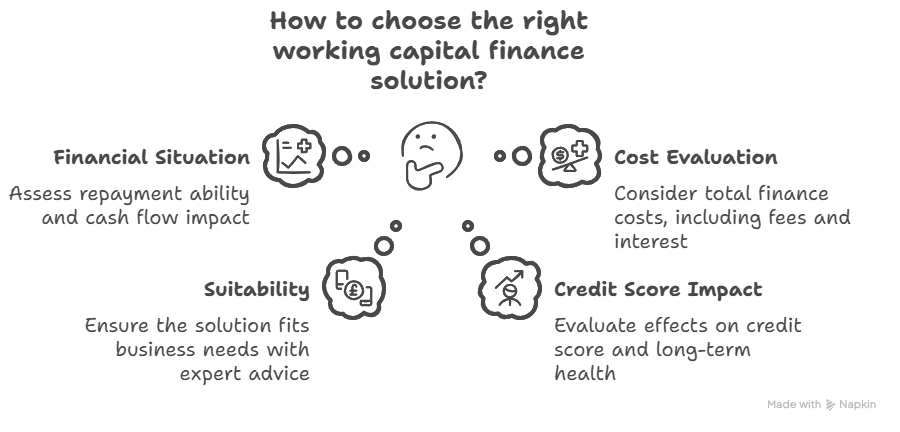
Selecting the right working capital finance solution involves careful consideration of several factors:
- Financial Situation: Assess your business’s ability to repay debt and the impact on cash flow. This includes evaluating your current financial position and future cash flow projections.
- Cost Evaluation: Consider the total cost of finance, including fees and interest rates, and how it affects your business’s financial health. This will help you determine the most cost-effective option for your needs.
- Suitability: Not all solutions fit every business; independent advice is recommended to choose the most suitable option. Consulting with financial advisors or industry experts can provide valuable insights.
- Impact on Credit Score: Evaluate how the chosen finance option will affect your business’s credit score and long-term financial health. Maintaining a strong credit profile is essential for future financing opportunities.
Choosing the Right Funders Matter, Choose Guavas!
In the complex world of working capital finance, choosing the right funders can make all the difference. Guavas offers tailored financial solutions that align with your business’s unique needs and growth ambitions. With a deep understanding of the UK market and a commitment to supporting businesses at every stage, Guavas provides the expertise and resources you need to navigate the financial landscape with confidence.
Whether you’re looking to optimize cash flow, invest in growth opportunities, or manage short-term expenses, Guavas is here to help you achieve your business goals. Explore our range of working capital finance solutions and discover how we can support your journey to success.
Get a quote today and let Guavas Finance help your business get funded!