

Invoice Finance vs Overdrafts

Invoice Finance vs. Overdrafts: Comparing Financing Solutions for UK Companies - Guavas Finance UK - Stick Man-20

Table Of Contents

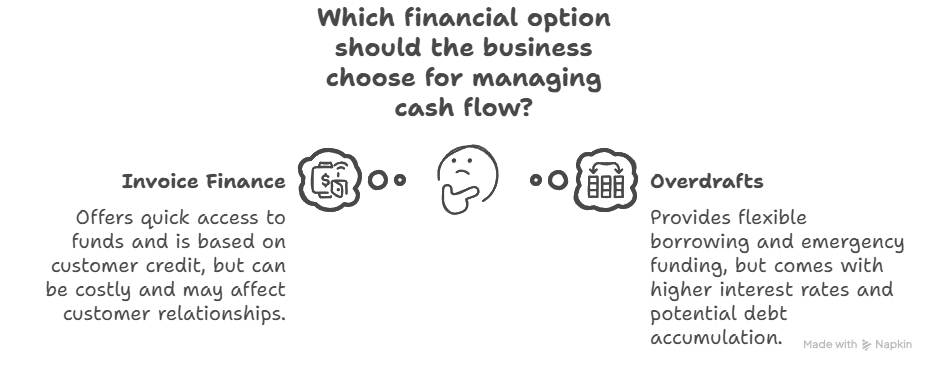
Navigating the financial landscape can be challenging for businesses, especially when it comes to choosing the right financing solution. Two popular options, invoice finance and overdrafts, offer distinct benefits and applications. Imagine a small manufacturing company in the UK facing delayed payments from clients. They need immediate cash flow to purchase raw materials and pay their employees. Should they opt for invoice finance or an overdraft?

This article delves into the intricacies of both options, helping you make informed decisions that align with your business needs.

Understanding Invoice Finance

Invoice finance is a financial arrangement where businesses use their unpaid invoices as collateral to secure immediate funding. This solution is particularly beneficial for companies with longer payment cycles, providing them with the necessary working capital without waiting for customer payments.

Explore more about invoice finance here and even get a quote.

Types of Invoice Finance

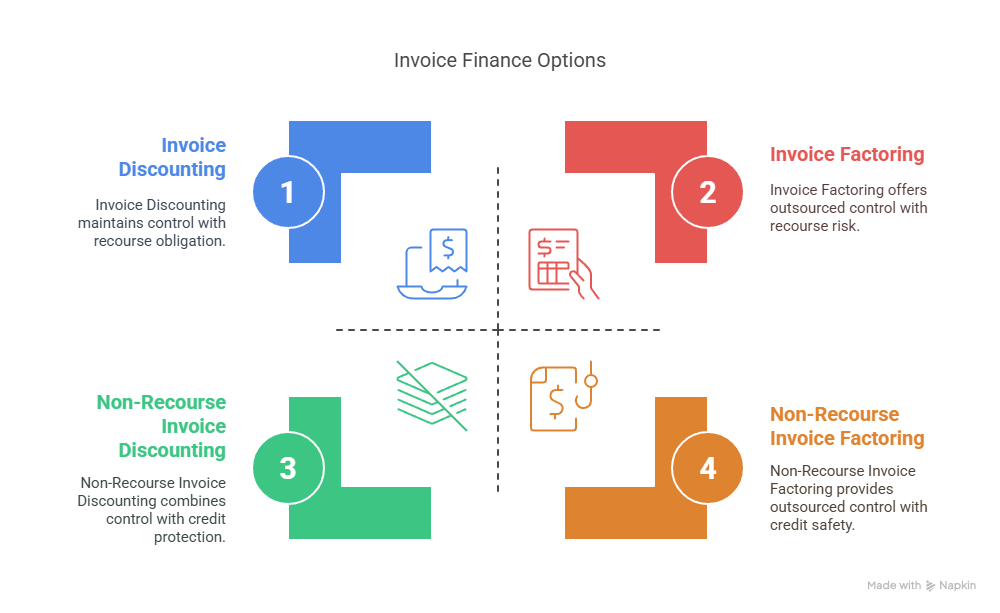
Invoice finance is categorized into two main forms: invoice factoring and invoice discounting.

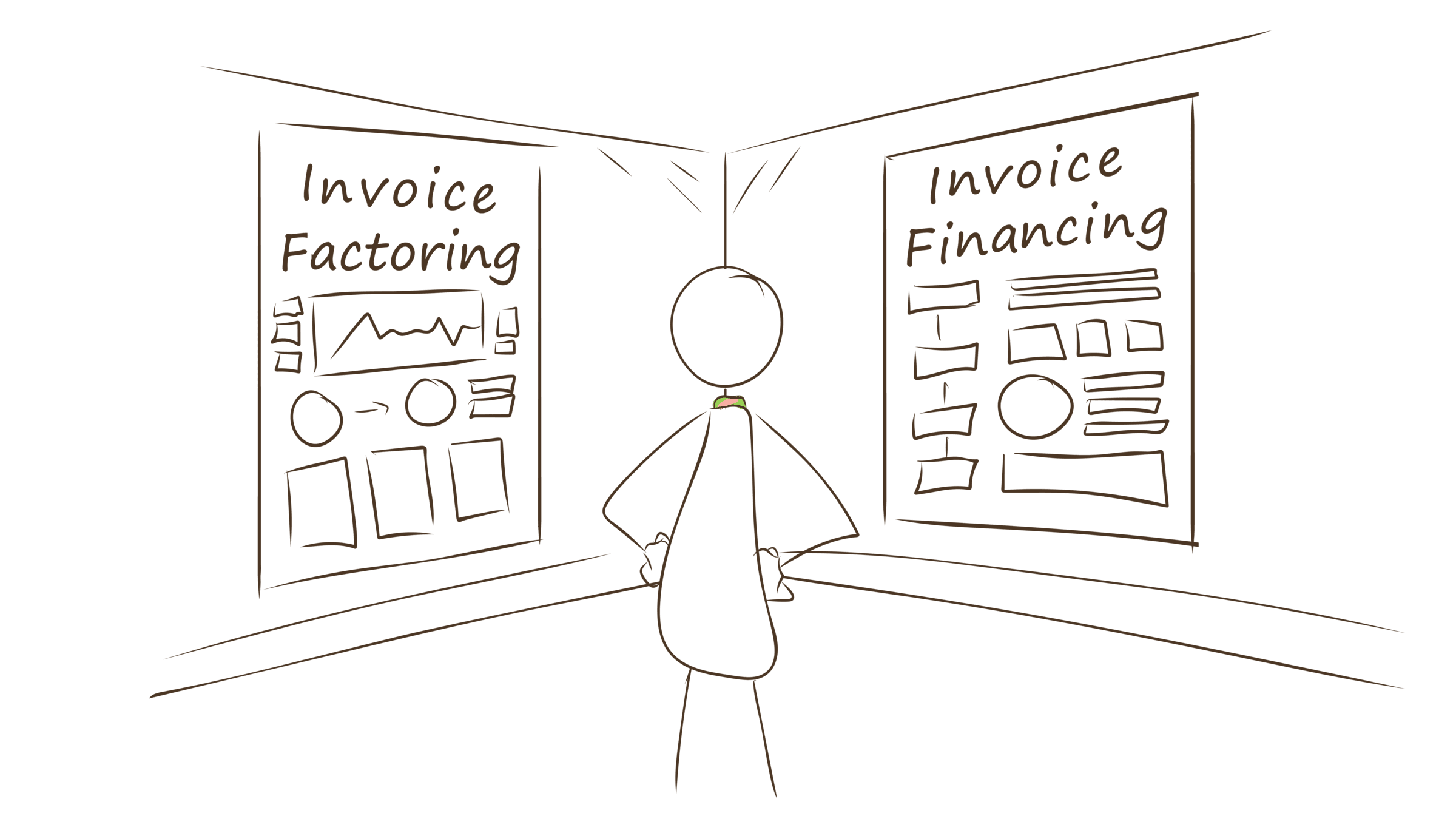
Invoice Factoring

In invoice factoring, a business sells its accounts receivable to a factoring company at a discounted rate. The factoring company then takes on the responsibility of collecting payments from customers. This arrangement not only brings immediate cash flow but also outsources the credit control process, saving time and administrative resources.

Want to know more about invoice factoring? We’ve explained the invoice factoring process completely here.

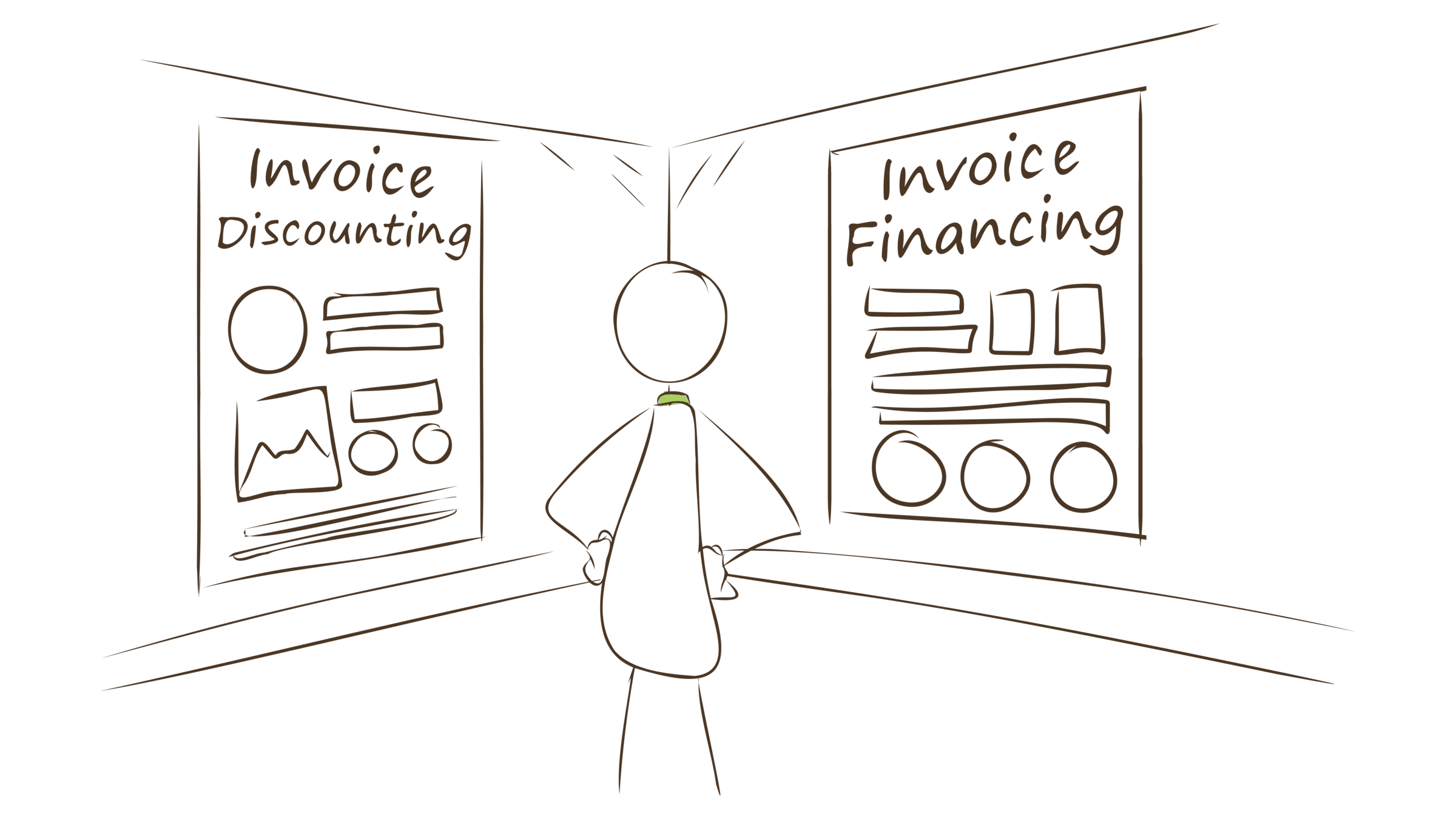
Invoice Discounting

Invoice discounting is similar to factoring, but the business retains control over its sales ledger and is responsible for collecting payments from customers. This option is often preferred by businesses that wish to maintain direct relationships with their clients without involving a third party.

Everything you need to know about invoice discounting can be found here.
Understanding Invoice Finance - Invoice Finance vs Overdrafts

How Invoice Finance Works for Businesses

The process of invoice finance typically involves the following steps:

  • Invoice Issuance: The business issues an invoice to its customer for goods or services delivered.
  • Invoice Sale: The business sells this invoice to a factoring or invoice discounting company.
  • Immediate Payment: The finance provider advances a significant percentage of the invoice’s value (usually around 70-90%) to the business, providing immediate liquidity.
  • Customer Payment: Depending on the type of invoice finance, either the finance provider (in factoring) or the business (in invoice discounting) collects the payment from the customer.
  • Balance Receipt: Once the full invoice amount is collected, the finance provider pays the remaining balance to the business, minus their fees and charges.

Eligibility Criteria for Invoice Finance

To be eligible for invoice finance, businesses typically need to meet the following criteria:

  • Type of Business: Usually, B2B (Business-to-Business) companies are eligible, as the financing is based on invoices issued to other businesses.
  • Creditworthy Customers: The creditworthiness of a company’s customers is crucial because the finance is secured against their invoices.
  • Volume of Sales: Some invoice finance providers require a minimum turnover or a certain volume of invoices to qualify.
  • Financial Health: A basic level of financial stability is often required, although this criterion can be less stringent than traditional bank loans.

Application Process for Invoice Finance

The application process for invoice finance generally involves the following steps:

  1. Initial Assessment: Contact a reputable broker, factoring company, or invoice finance provider and provide basic information about the business and its customers.
  2. Proposal and Agreement: If eligible, the finance provider will offer a proposal outlining the terms of the finance, including fees and the percentage of invoice value that will be advanced.
  3. Due Diligence: The provider may conduct a review of the company’s financial statements, customer invoices, and creditworthiness.
  4. Agreement Signing: Once both parties agree on the terms, a contract is signed.
  5. Funding: After the agreement, the business can start submitting invoices for financing.

Facility Size

The facility size in invoice finance is directly linked to your sales ledger. It grows as your sales grow, and businesses can often access a facility size equal to 1-2 months’ revenue. Typically, you can access a percentage (usually around 70-90%) of the value of your outstanding invoices. So, if your sales increase, your available funding increases too.

Recourse

Invoice finance can be with or without recourse. With recourse means if your customer fails to pay the invoice, you are responsible for repaying the finance provider. Non-recourse invoice finance includes a form of credit protection – if your customer becomes insolvent, you are not liable to repay the finance provider for that invoice.

What is Overdrafts?

An overdraft is a financial instrument allowing businesses to withdraw money from their bank accounts, even if the account balance is zero, up to an agreed limit. This facility is particularly useful for managing short-term cash flow issues, as it provides a buffer for businesses to continue operations during periods of limited liquidity.

Types of Overdrafts

Overdrafts are categorized into two types: authorised and unauthorised.

Authorised Overdrafts

These are overdraft limits pre-agreed upon with the bank. The business can borrow up to this limit at a specified interest rate. Authorised overdrafts are ideal for businesses seeking a predictable and secure method of managing cash flow shortfalls.

Unauthorised Overdrafts

Unauthorised overdrafts occur when a business exceeds its authorised overdraft limit or when an account goes into the negative without a pre-arranged overdraft. These usually attract significantly higher interest rates and additional fees, making them a less desirable option for prudent financial management.

What is Overdrafts? - Invoice Finance vs Overdrafts

General Use of Overdrafts in Business Finance

Overdrafts are primarily used by businesses for short-term financing needs. They are particularly useful for covering operational costs like payroll, utility bills, or emergency expenses when there’s a temporary gap in cash flow. Unlike long-term loans or other forms of financing, overdrafts are flexible – a business only pays interest on the amount overdrawn, and this interest is typically charged on a daily basis.

Eligibility Criteria for Overdrafts

For overdrafts, the eligibility typically depends on:

  • Banking History: A good banking history with the bank is often essential.
  • Credit Score: A strong credit score can influence the overdraft limit and interest rate offered.
  • Business Performance: Proof of stable business performance and income can be required to assure the bank of repayment capacity.

Application Process for Overdrafts

The process for securing an overdraft is usually as follows:

  1. Application Submission: The business needs to apply through their bank, either online, over the phone, or in person.
  2. Credit Assessment: The bank assesses the business’s creditworthiness, financial history, and business performance.
  3. Approval and Terms Agreement: If approved, the bank sets an overdraft limit and agrees on the interest rate and terms with the business.
  4. Access to Funds: Once agreed, the business can access the funds up to the set limit.

Facility Size

The overdraft limit is generally fixed and based on your business’s creditworthiness and banking history, rather than your sales. The overdraft size, or facility size, is often a fraction of your monthly revenue, as the overdraft is unsecured and the bank has no recourse at that stage. It doesn’t automatically increase with increased sales or business growth, making it less flexible compared to invoice finance.

Recourse

Overdrafts are always with recourse. This means the business is fully responsible for repaying the overdraft amount. If the business fails to repay, the bank can use legal means to recover the funds, impacting the business’s credit rating.
Invoice Finance vs Overdrafts - Which one is better? Invoice finance or Overdrafts

Advantages and Disadvantages of Invoice Finance

6 Main Advantages of Invoice Finance

Invoice finance offers several benefits, making it an appealing option for many businesses:

  1. Immediate Access to Funds: Unlike traditional loans, which can take weeks or months to process, invoice finance provides quick access to working capital, often within 24-48 hours of invoicing.
  2. Based on Customer Creditworthiness: The focus on customers’ creditworthiness rather than the business’s credit allows newer or smaller companies with strong clients to secure funding.
  3. Improved Cash Flow Management: It bridges the gap between issuing invoices and receiving payments, helping businesses maintain a steady cash flow.
  4. Growth and Expansion: Access to consistent cash flow enables businesses to invest in growth opportunities without waiting for customer payments
  5. Reduced Administration Burden: With invoice factoring, the factoring company handles the collection of payments, reducing the administrative workload on the business.
  6. Flexibility: The funding amount grows with increased sales, providing more capital in line with business growth.

3 Main Disadvantages of Invoice Finance

  1. Cost: Invoice finance can be more expensive than traditional loans, with fees and a percentage of the invoice value charged.
  2. Dependence on Customer Payment Habits: Late payments by customers can affect the cash flow.
  3. Customer Relationships: In the case of factoring, the involvement of a third party in collections might impact customer relationships.

Advantages and Disadvantages of Overdrafts

4 Advantages of Overdrafts

Overdrafts also present certain advantages, particularly for short-term financial needs:

  1. Flexibility in Borrowing: Businesses can draw funds as needed, up to the overdraft limit, making it a flexible option for managing cash flow.
  2. Pay for Use: Interest is typically charged only on the overdrawn amount, not the entire overdraft limit, which can be cost-effective for short-term borrowing.
  3. Easy Accessibility for Established Businesses: For businesses with a good relationship with their bank, setting up an overdraft can be relatively straightforward and quick.
  4. Emergency Funding: Overdrafts can be a lifeline in emergencies, providing immediate access to funds for unforeseen expenses.

3 Disadvantages of Overdrafts

  1. Higher Interest Rates: Overdrafts generally come with higher interest rates than other forms of credit.
  2. Potential for Debt Accumulation: Relying on overdrafts for long-term funding can lead to a cycle of debt.
  3. Uncertainty: Banks can withdraw the facility or alter the limit, which can create uncertainty for businesses relying on the overdraft.

Case Studies and Real-World Examples For Invoice Finance vs Overdrafts

Success Stories with Invoice Finance

Manufacturing Company Expansion

A UK-based manufacturing company faced cash flow issues due to long payment terms with its customers. By adopting invoice factoring, they were able to access 85% of their invoice values immediately, enabling them to invest in new machinery and expand their production capacity.

Start-up Growth

A tech start-up, despite having reputable clients, struggled with maintaining operational costs due to delayed invoice payments. With invoice discounting, they managed to sustain a steady cash flow, allowing them to hire more staff and scale their operations.

Scenarios Where Overdrafts Were Beneficial

Emergency Repairs for a Service Company

A service company faced unexpected equipment breakdowns. An overdraft facility allowed them to quickly finance the repairs, ensuring minimal disruption to their services.

Short-term Cash Flow Management

A retail business experiencing seasonal fluctuations used an overdraft to manage inventory purchases during peak seasons, repaying the borrowed amount when sales revenue increased.

Invoice Finance Case Studies: Across UK Industries

Comparison and Contrast: Invoice Finance vs Overdrafts

When comparing invoice finance and overdrafts, several key differences emerge:

  1. Suitability: Invoice finance is often more suited for businesses with a longer sales cycle and significant amounts in receivables, while overdrafts are ideal for short-term, ad-hoc financial needs.
  2. Dependency: Invoice finance depends on your sales ledger and is directly tied to your business’s transactions with customers. In contrast, overdrafts are more dependent on the business’s credit status and history with the bank.
  3. Cost-effectiveness: Overdrafts can be costlier in terms of interest rates, especially if used frequently or over extended periods. Invoice finance, though potentially expensive, offers the advantage of predictable costs proportional to sales.
  4. Cash Flow Impact: Invoice finance directly aligns with a business’s sales and can provide a more substantial and consistent cash flow boost compared to overdrafts.
  5. Control Over Customer Relationships: With invoice discounting, businesses maintain control over their sales ledgers and customer relationships, a feature not applicable in overdrafts or invoice factoring.
  6. Flexibility and Scalability: Invoice finance scales with a business’s sales volume, offering greater flexibility for growing businesses compared to the fixed limits of overdrafts.
  7. Risk and Recourse: Non-recourse invoice finance reduces the risk of bad debts, while overdrafts always come with full recourse to the business.

Why Invoice Finance Stands Out

For many UK businesses, especially those with longer invoice payment terms, invoice finance stands out as a better option for several reasons. For a business looking to manage cash flow, invoice finance offers a more flexible and potentially larger facility size that grows with your sales, and can offer reduced risk through non-recourse options. It provides more significant and consistent liquidity compared to the fluctuating nature of overdrafts.

This access to immediate working capital supports business growth and investment opportunities. In the case of factoring, the factoring company’s expertise in credit management can be an added benefit. Since invoice finance is secured against receivables, businesses with less-than-perfect credit can still access funding.

Explore working capital financing options in detail here.

Still undecided? Get in touch with Guavas. We’ll help.

Choosing the right financial solution can be daunting, but you don’t have to do it alone. At Guavas, we specialize in helping businesses like yours navigate the complexities of financial options. Whether you’re leaning towards invoice finance or considering an overdraft, our team of experts is here to guide you every step of the way. Contact us today to explore the best financing solutions tailored to your business needs.

Get a quote today and get funded tomorrow with Guavas Finance!

Get invoice finance today!

get your obligation free quote here.

Step 1 of 11 - Progress 0%

This field is for validation purposes and should be left unchanged.
Have you used invoice finance before?*
Terms and conditions apply
Guavas Finance Awarded Moneyfacts Invoice Finance Broker 2025
  • Receive up to 95% of your unpaid invoice value
  • Stop chasing unpaid invoices with Guavas Finance
  • Simple, stress-free funding within 24-48 hours
  • Obligation free decision process with no credit score impact

Skip the Read and Just Get the Quotes

Stop decision fatigue! Skip our analysis and compare up to four tailored offers from our selected suppliers. Just fill in our simple, non-binding, and free-of-charge quote form.
Simplified Business Finance Solutions with Guavas - Guavas Finance UK
Posted on: 31 March 2025
Ben van Rooyen
Founder and CEO
Ben van Rooyen, an accomplished entrepreneur and finance expert, founded Guavas in 2023 to revolutionise commercial financing for SMEs. With over 16 years of experience in senior roles across the financial services sector, Ben combines deep industry expertise with first-hand entrepreneurial insights. His mission is to simplify complex financial landscapes, enabling businesses to make informed decisions and access the capital they need to thrive.

Relevant Articles

© 2026. Guavas Finance Ltd

Shelton Street, Covent Garden, London, WC2H 9JQ, UK
Logo Guavas Finance UK - Leading Finance Services in UK for Small Business White SVG

© 2026. Guavas Finance Ltd

Shelton Street, Covent Garden, London, WC2H 9JQ, UK

Are you in a Rush?
Talk To Our Experts

  • We'll call you in less than 5 minutes - test it!
  • Get matched with the best finance lenders in the UK.
  • Protected by our 48-Hour Funding Guarantee.

This field is for validation purposes and should be left unchanged.
This field is hidden when viewing the form

Business Credit Card Quote

Step 1 of 10 - Progress 0%

This field is for validation purposes and should be left unchanged.
Terms and conditions apply.

Tax & VAT Funding Quote

Step 1 of 12 - Progress 0%

This field is for validation purposes and should be left unchanged.
Terms and conditions apply.

Property Finance Quote

Step 1 of 8 - Progress 0%

This field is for validation purposes and should be left unchanged.
Subject*
Terms and condition apply.

Invoice Finance Quote

Step 1 of 11 - Progress 0%

This field is for validation purposes and should be left unchanged.
Have you used invoice finance before?*
Terms and conditions apply.

Business Loan Quote

Step 1 of 11 - Progress 0%

This field is for validation purposes and should be left unchanged.
Have you taken out a business loan before?*
Terms and conditions apply.

Asset Finance Quote

Step 1 of 10 - Progress 0%

This field is for validation purposes and should be left unchanged.
Terms and conditions apply.

Get Quotes With Guavas

Terms and condition apply.